.png)

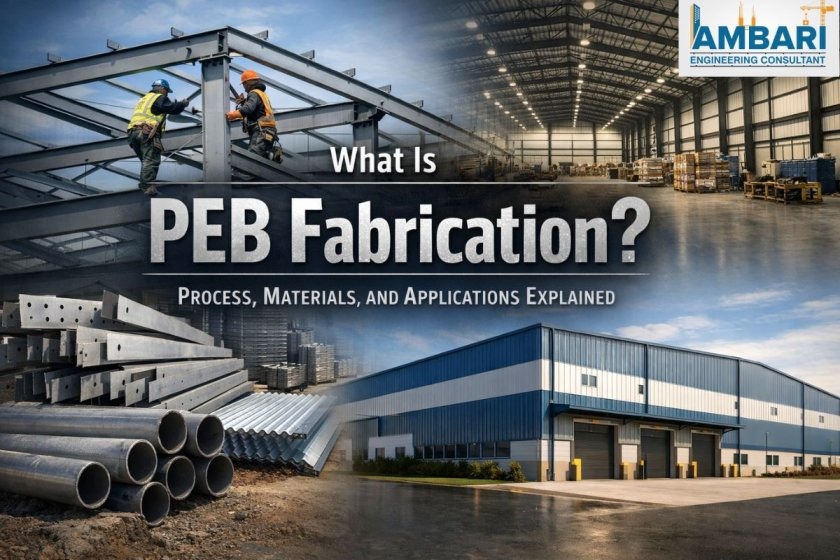
PEB buildings have revolutionized the construction industry, as they offer quick, inexpensive, and versatile building solutions. From the industrial warehouse to the commercial complexes, PEBs are taking over as the favorite amongst the builders. This guide takes you through the whole process of the PEB, from planning all the way to the final construction, in simple and easy-to-understand terms.
Moreover, when you are thinking of pre-engineered building manufacturers in India, it will be wise to understand each step. So that you can make better decisions, prevent setbacks, and have a successful and cost-effective building project in accordance with your requirements.
A pre-engineered building is a building that is designed and fabricated using prefabricated materials like steel frames, trusses, and panels. PEB, unlike traditional construction, is quicker to install, less expensive in terms of labor, and durable.
Key benefits of PEB:
PEB planning is used to ensure all the processes, from design to installation, proceed without a hitch. Unless properly planned, delays, excessive costs, and structural problems may occur. Good planning entails organization of architects, engineers, and manufacturers.
Why planning is crucial:
The initial process in PEB planning involves understanding the project requirements clearly. This includes:
Type of building (warehouse, factory, or commercial facility).
Overall size and dimensions of the structure.
Functional requirements such as load capacity, ventilation, and access doors.
Defined budget and project timeline.
At this stage, consulting pre-engineered building manufacturers in India helps in estimating project costs and assessing feasibility. This ensures that the project aligns with practical construction possibilities and available resources.
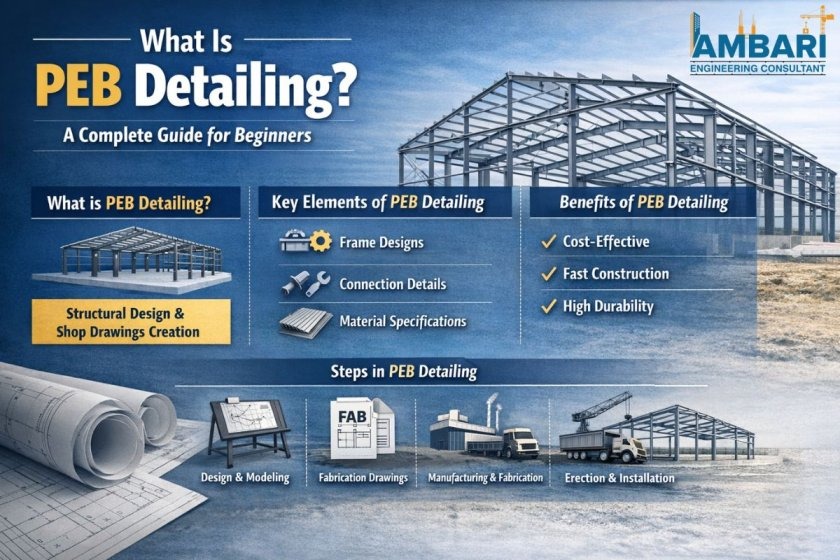
After identifying the project requirements, the next step involves PEB design and detailing services in India. This phase focuses on creating accurate and construction-ready designs.
Structural analysis to ensure safety and overall stability.
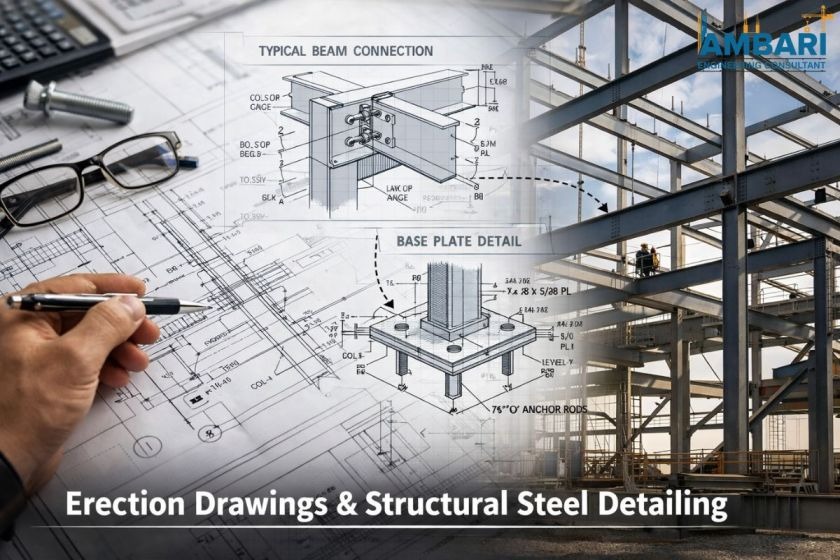
Preparation of detailed 2D and 3D drawings.
Detailed breakdown of components such as beams, trusses, and roof panels.
Integration of electrical, plumbing, and other utility services.
Professional detailing minimizes errors during fabrication and on-site assembly. A well-developed design also ensures compliance with local building codes, safety standards, and regulatory requirements.
The selection of materials plays a crucial role in ensuring the durability and cost efficiency of a pre-engineered building. Choosing the right materials enhances performance and longevity.
Steel frames for primary structural support.
Roof and wall panels for enclosure and protection.
Fasteners and bolts to ensure strong and secure connections.
Insulation materials to improve thermal and acoustic efficiency.
Furthermore, pre-engineered building estimation in India is carried out at this stage. Accurate estimation ensures there is no material wastage or shortage during fabrication. It also supports effective financial planning and helps prevent budget overruns.
The manufacturing process begins after the approval of the design and selection of materials. Pre-engineered components are produced in a controlled factory environment, ensuring high precision and consistent quality.
Uniformity and consistency of steel frames and panels.
Reduced on-site labor requirements.
Shorter and more efficient project timelines.
Factory-based fabrication minimizes site disturbances, improves working conditions, and significantly enhances overall construction safety.
Once fabrication is complete, the components are transported safely to the construction site. Effective planning ensures secure delivery and smooth installation of all elements.
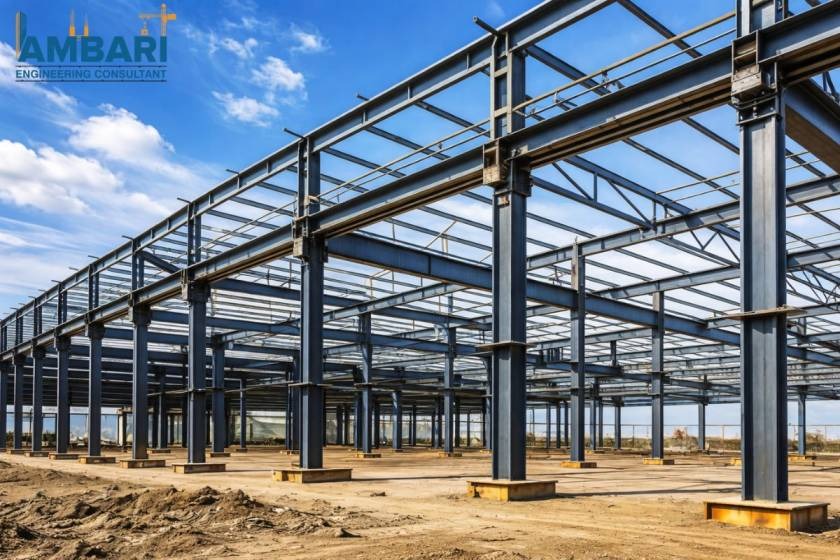
Erection of steel trusses and primary frames.
Installation of wall and roof panels.
Fitting of doors, windows, and other finishing materials.
On-site assembly is carried out efficiently, allowing the structure to be completed quickly while maintaining its integrity. Close supervision during this phase is essential to avoid errors and ensure proper alignment.
Quality inspection is the final stage of PEB planning. This ensures that the building meets design standards and safety requirements.
Check alignment and overall structural stability.
Ensure proper installation of panels, fasteners, and connections.
Verify adherence to all design specifications and safety standards.
Once the inspection is complete, the building is handed over to the client. Proper planning throughout the PEB project ensures sustainability, safety, and client satisfaction.
The pre-engineered buildings are an intelligent, affordable, and efficient option in contemporary construction projects. The proper planning throughout the whole process from the idea to the handover is important in making it successful. Through collaborating with seasoned pre-engineered building manufacturers in India and by hiring professional PEB design and detailing services in India and proper pre-engineered building estimation in India, you can get your project through without any trouble.
However, PEBs are a convenient choice in any building, be it an industrial warehouse, commercial space, or storage area, as they are fast, safe, and versatile and are a convenient solution to current construction requirements.
What is a pre-engineered building (PEB)?
A PEB is a building manufactured in factories, designed to provide fast, affordable, and versatile building solutions.
Why choose PEB over traditional construction?
PEBs are quicker to construct, cost-effective, flexible in design, and require less on-site manpower.
How is PEB estimated in India?
Estimation considers material, design, fabrication, transportation, and assembly costs to provide an accurate project budget.
Who provides PEB design and detailing services in India?
Experienced engineers and specialized companies offer PEB design, detailing, and structural analysis services to ensure safe construction.